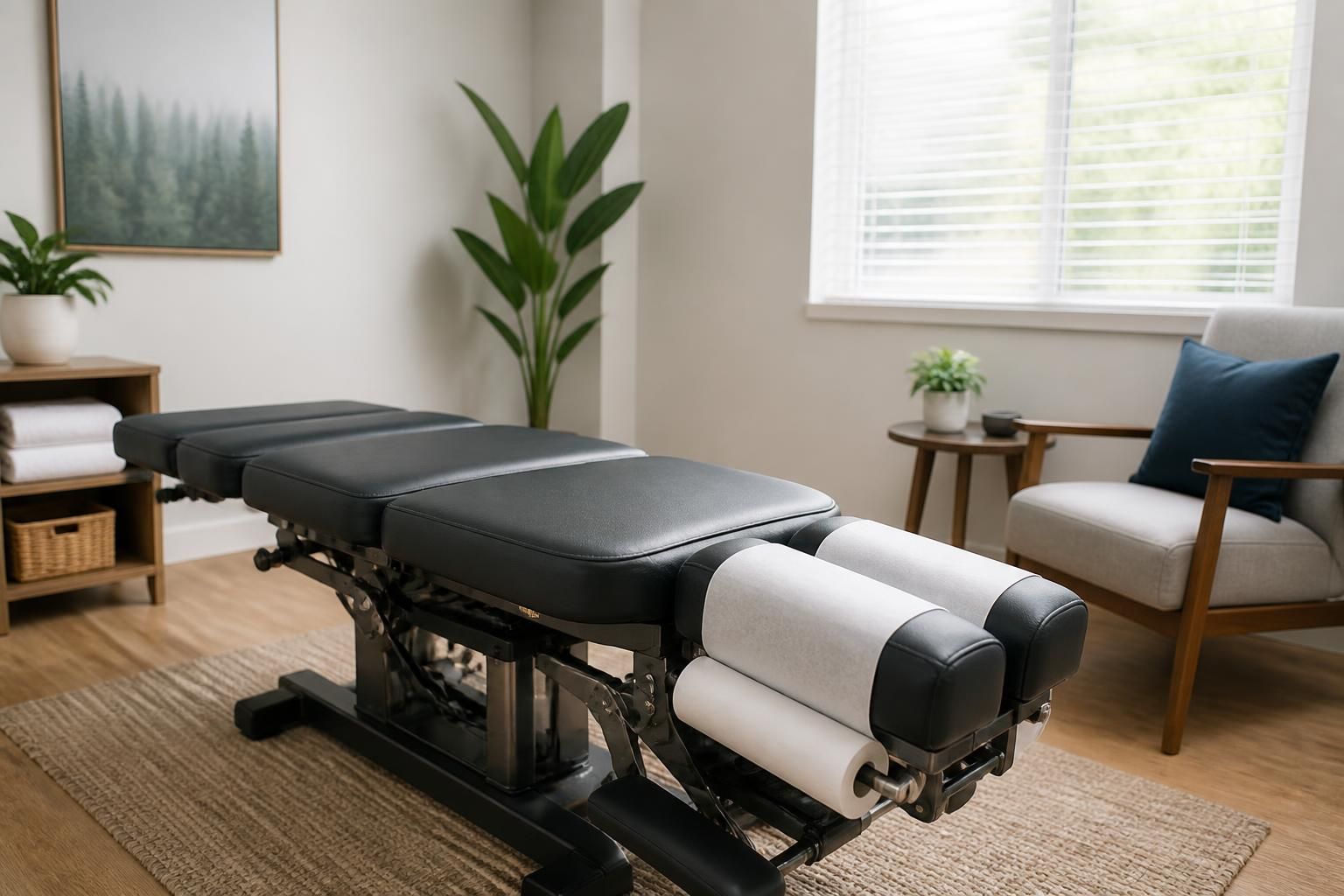
A car accident can leave you feeling stiff, sore, and unsure what to do next, even when the damage looked minor at first.
If your neck tightens when you turn, your back aches when you sit, or headaches started after the crash, Injury Relief Chiropractic - Fairfax can help you take the next step with focused auto accident care at 10721 Main St Ste 107, Fairfax, VA 22030, USA.
Symptoms after a crash do not always show up right away. Some people feel shaken up for a few hours, then notice pain, limited motion, or irritation that lasts through the week. Others feel fine at the scene, then wake up with a stiff neck, aching shoulders, or pain that makes driving and working harder than usual. We see these concerns often and build care around the way your body is responding now, not just what happened during the impact.
Injury Relief Chiropractic - Fairfax provides auto accident care for people dealing with whiplash, back strain, neck pain, sciatica, headache patterns, and soreness that affects daily movement. If you are trying to figure out whether your discomfort is serious enough to address, start with the symptoms you have, then let us evaluate how the crash may have affected joints, muscles, and surrounding soft tissue.
Auto accident injuries can involve more than one area of the body. A rear-end impact may strain the neck, while sudden braking or twisting may irritate the low back, hips, or mid-back. Even seatbelt force can leave you tender across the chest, shoulder, or ribs. The earlier you pay attention to changes, the easier it is to connect symptoms to a clear care plan.
These signs do not mean the same thing for every person, which is why a specific evaluation matters. Two people may be in the same kind of collision and walk away with very different concerns.
When you come to us for auto accident care, we start by listening closely to what happened, where you hurt, and what movements are hardest right now. That first conversation matters because collision injuries can affect more than one area, and the pain pattern often tells us where to focus.
This process helps remove guesswork. Instead of trying random stretches or ignoring soreness until it becomes harder to manage, you get a practical plan centered on your injuries and daily routine.
Auto accident care may involve several chiropractic approaches, depending on what your body needs. For some people, the main issue is neck and upper back tension. For others, the low back, pelvis, or sciatic nerve area needs attention. We may combine gentle spinal adjustments with supportive therapies to help reduce stress on irritated tissues and improve movement over time.
Chiropractic therapy can help address restricted joints, muscle guarding, and the strain that often follows a collision. When your body is moving with less ease, everyday tasks like driving, working at a desk, sleeping, or lifting can become more frustrating. Care is tailored to the specific areas involved.
Some accident-related pain is tied to stubborn muscle tightness or trigger points. Dry needling and active release technique, also called ART, may be used to address soft tissue tension that contributes to stiffness, pulling, or discomfort during movement.
If the crash aggravated disc-related pain or sciatica, spinal decompression therapy may be part of the plan. Corrective exercises and physical therapy-style movement work can also support stability, rebuild tolerance for motion, and help you feel more confident doing normal activities again.
We also offer related care such as spinal adjustments, neck pain relief, back pain relief, sciatica treatment, sports injury care, pregnancy chiropractic, pediatric chiropractic, and massage therapy when those services fit the situation. Not every patient needs the same combination, and your care should reflect that.
Collision injuries often show up as patterns rather than a single sore spot. Understanding the pattern helps shape the right plan.
Whiplash can create soreness, limited turning, headaches, and a heavy feeling through the shoulders or upper back. Neck care often focuses on restoring comfortable motion while reducing the strain that keeps symptoms active.
Low back pain may appear as a dull ache, a sharp catch, or irritation that travels down one leg. When the crash affects disc mechanics or surrounding tissues, sciatica treatment and decompression may be helpful parts of the process.
Muscles and supporting tissues can tighten quickly after sudden impact. That tension may show up as a pulling sensation, tenderness, or pain when you twist, reach, or stand up after sitting.
Being prepared helps your first visit move smoothly. If you have details from the crash or notes from another provider, bring them with you. If not, that is okay. We can still begin with the information you know.
Injury Relief Chiropractic - Fairfax also works with personal injury lawyers and provides documentation support as part of care, which can be helpful when you are managing recovery after a crash. That support lets you focus on healing while staying organized about your treatment process.
People seeking auto accident care often need a clinic that is close, accessible, and straightforward to contact. Our Fairfax location at 10721 Main St Ste 107 serves patients who want a local option for chiropractic follow-up after a collision.
We are open Monday through Friday from 9:00 AM to 7:00 PM, with Saturday and Sunday closed. If you are planning your visit, you can call +18337741075 to ask about the next step for your situation. The clinic also offers multilingual staff and free parking at its locations, which can make the process easier when you are already dealing with pain or reduced movement.
Look for neck stiffness, back pain, headaches, shoulder tension, numbness, tingling, or movement that feels limited. Symptoms may begin right away or appear later.
Yes. Mild discomfort can still reflect strain from the collision, and early attention may help you understand what is driving the symptoms before they become more disruptive.
No. You do not need a dramatic injury to benefit from an evaluation. Pain, tightness, and reduced motion after a crash are worth checking.
Chiropractic care can help address joint motion, muscle tension, and related pain patterns that often follow a collision. The approach depends on your symptoms and exam findings.
Yes. It is common for a crash to affect more than one area, and your care plan can address several symptoms at the same time.
No. As symptoms change, the plan can change too. Recovery often moves through stages, and treatment should match that progress.
If you are dealing with pain after a collision and want clear next steps, schedule auto accident care with Injury Relief Chiropractic - Fairfax and let us help you move forward with a plan that fits your symptoms.

Book Your Visit
Reach out to Injury Relief Chiropractic in Fairfax to discuss your pain, your injury history, and the care approach that may fit your recovery goals.